

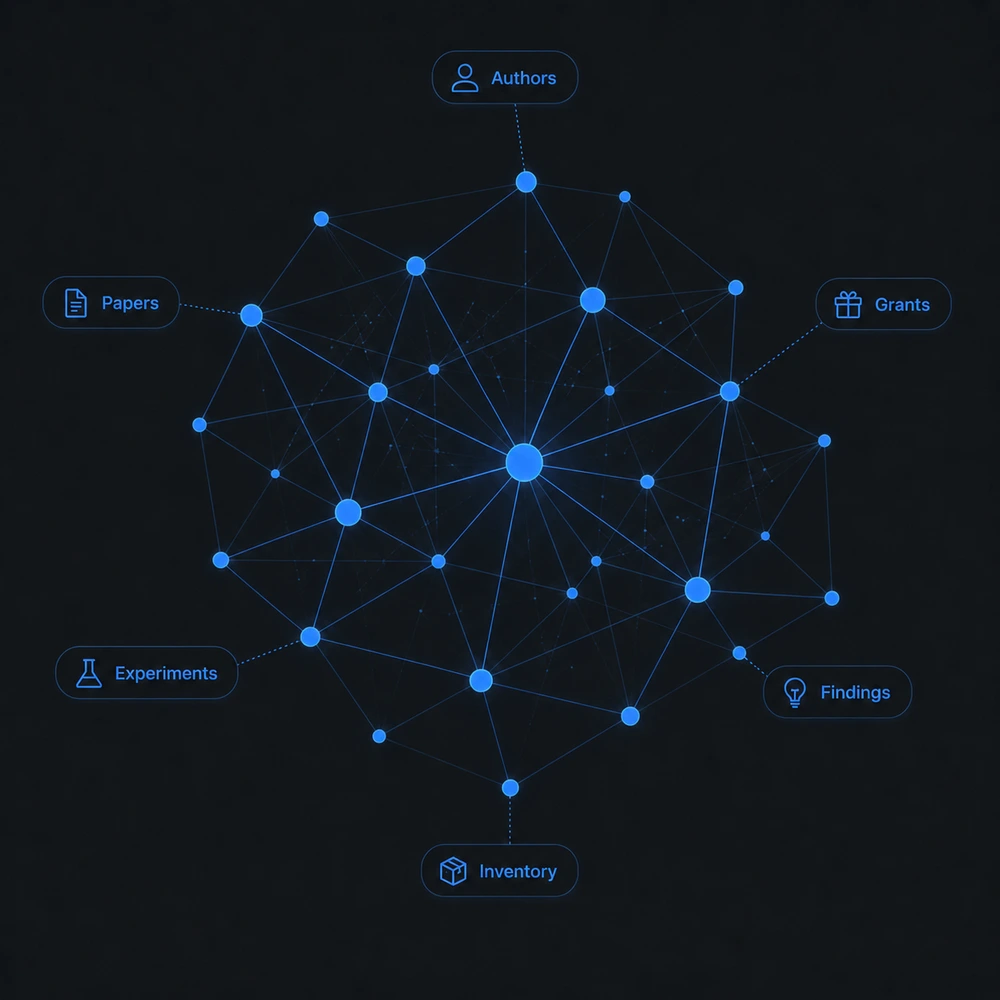
Etora is an Autonomous Engine for Scientific Breakthroughs.
One engine for
AI-powered workspace to discover literature, find funding, manage experiments, and accelerate scientific discovery.
Trusted by researchers at



Evidence to Outcome Research Accelerator
Don't Repeat What's
Already Been Tried.
Etora reads 50–100 years of literature to surface what's already been attempted — then proposes a new, evidence-backed route. Every claim is cited and traceable, with zero hallucination, so no experiment is wasted and no budget burns on a dead end.
Build
Library
Discover
Recommendations
Ask
Etora
Capture
Notebook
Find
Grants
Manage
Inventory
Research Library Intelligence
Smarter Literature Search.
Deeper Insights.
Move beyond keyword search. Etora understands meaning, context and relationships across your research library.
Ask Your Library
Ask questions in natural language; answers are grounded in your papers.
Recommendations
New papers matched to the keywords in your libraries.
Traceable Citations
Every answer links back to the source paper.
Shared Libraries
Build and share collections across your lab.
Extracellular vesicles as biomarkers in metastatic melanoma
Nature Communications · 2024
Mechanism of miRNA cargo sorting in extracellular vesicles
Cell · 2025
EV-based diagnostics for early detection of cancer metastasis
Science Translational Medicine · 2023
AI Insight
12 relevant papers found with high confidence.
Key topics
Security & Privacy
Your Research Stays Yours.
Enterprise-grade security for the highest standards in research.
Data Isolation
Your data is encrypted and isolated in your secure workspace.
Access Control
Role-based permissions ensure the right access every time.
Audit Logs
Every action is logged for transparency and compliance.
Compliance
Built for SOC 2, GDPR and HIPAA-ready operations.
Your data never leaves your control. We do not train on your data. Ever.
Connected Sources
Everything You Work With, Connected.
Add libraries, files and notes as sources to any Ask Etora conversation. Every answer is grounded in the sources you choose, with citations you can trace.
Grounded Answer
Q: How do EV cargo signatures relate to metastatic progression?
Answered from your attached sources: 3 libraries, 5 files and 2 notebook pages — every claim linked to its citation.
View citations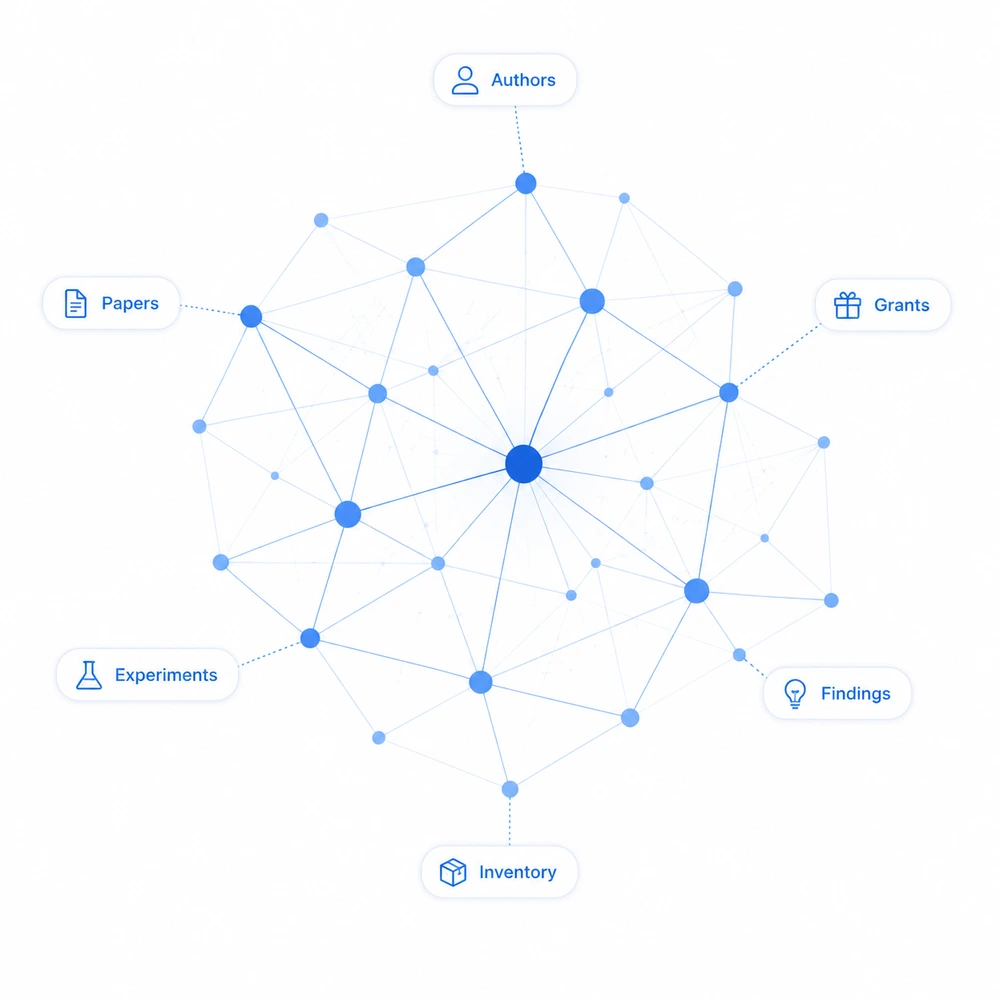
Grant Intelligence
Find the Right Funding. Faster.
Etora matches funding opportunities to the keywords in your research libraries across NIH, NSF, DoD, foundations and global programs.
R01 — Mechanisms of Metastasis in Cancer
Matched to the keywords in your libraries.
$2.3M
Due Jun 5Pathway to Robust and Reliable Biomedical Technologies
Matched to the keywords in your libraries.
$1.2M
Due Jul 18Breakthrough Technologies Program
Matched to the keywords in your libraries.
$900K
Due Aug 1Papers Intelligence
Understand Papers. At the Speed of Science.
Etora turns static PDFs into structured intelligence: hypotheses, methods, results, limitations, datasets and citations.
Paper Summary
This study identifies EV-derived proteins associated with melanoma metastasis and validates biomarkers in patient samples.
Hypothesis
EV cargo reflects metastatic phenotype.
Methods
EV isolation, proteomics, cohort analysis.
Results
3 biomarkers strongly associated with progression.
Citations
68 references linked and traceable.
Citations
- 1
Nature Communications
2024 · p. 4
- 2
Cell
2025 · p. 118
- 3
Sci. Transl. Med.
2023 · p. 7
- 4
J. Extracell. Vesicles
2024 · p. 22
Lab Notebook
Capture. Organize. Accelerate.
A modern lab notebook for how researchers actually work: rich pages organized in folders, started from templates and shared with your lab.
Experiment EV-2024-041
Edited 2h agoObjective
Isolate and characterize EVs from metastatic melanoma cell lines.
Protocol
EV Isolation Protocol v2.1
Observations
High yield in 72h collection. EV size distribution within expected range.
Metadata
Author
Dr. Jane Smith
Date
May 9, 2026
Project
EV Biomarkers
Tags
EV · Melanoma · qEV
Inventory Management
Every Consumable Counts.
A single biological experiment can cost hundreds of dollars — so wasted reagents are wasted budget. Track what every lab has, organized by category and searchable in one place, so nothing expires unused or gets double-ordered.
- DMEM High Glucose11965-09224Cold Room A
- Fetal Bovine Serum16000-0448Freezer −20°C
- PBS (10X)70011-0442Shelf B3
- Trypsin-EDTA25200-05615Cold Room A
- Penicillin-Streptomycin15140-1226Freezer −20°C
Inventory Discovery
Search across every product inventory in this lab.
Collaboration
Built for Research Teams.
Keep work private, share it with your research space, or sign it — libraries, notes and files all carry the same visibility controls.
EV Biomarkers
Shared by Dr. Jane Smith
128 files · 128 ready · Updated May 2026
Metastasis Review
Shared by Sarah Johnson
42 files · 30 ready · Updated May 2026
Pricing
One research platform. A plan for every lab.
Every plan includes the complete Etora research platform. Choose based on your team size and usage.